

10.07.2025
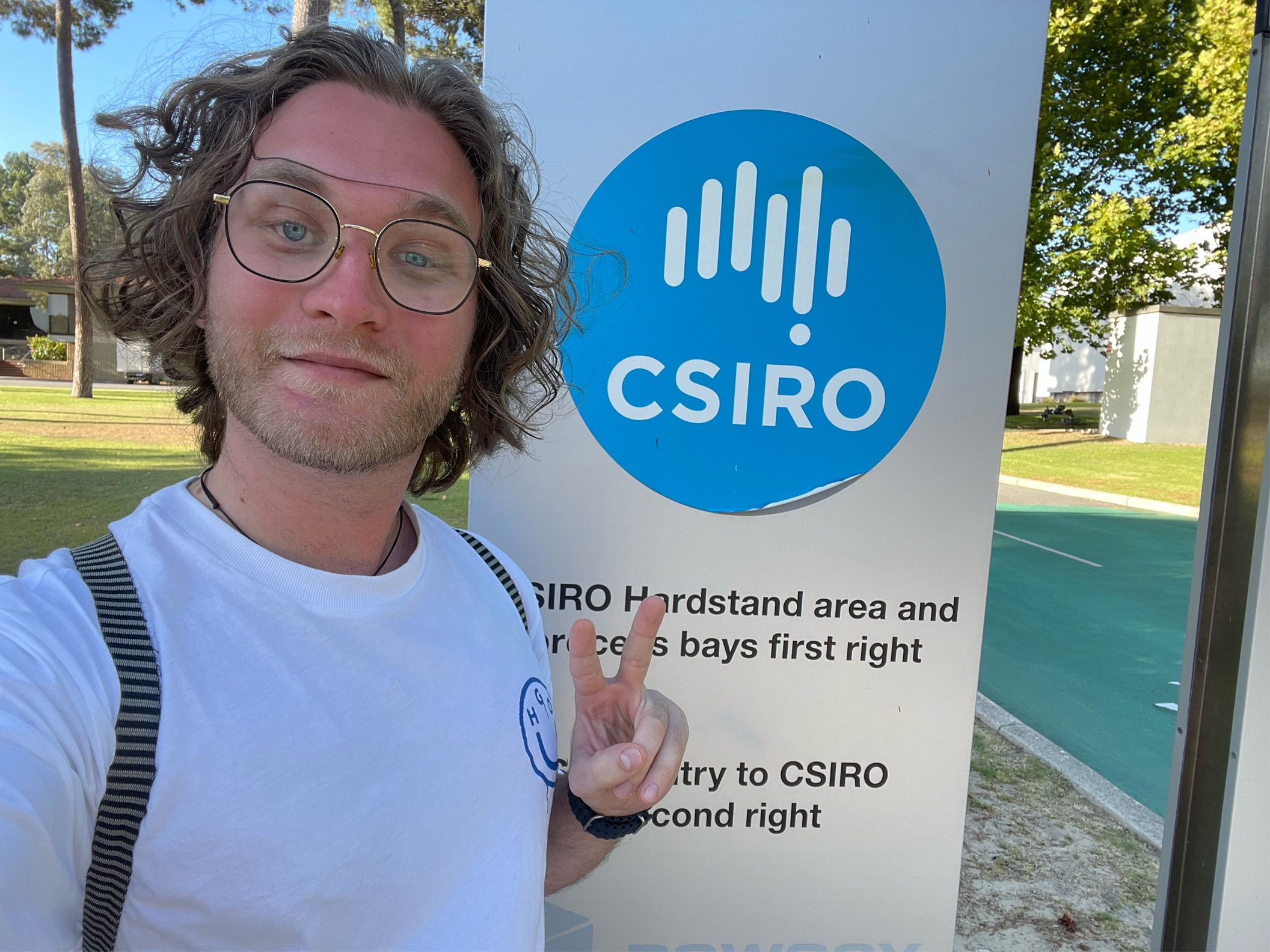
The CSIRO Student Program is a competitive initiative by the CSIRO, Australia’s national science agency. The program supports a small number of early-career researchers whose work aligns closely with CSIRO’s scientific priorities and who actively contribute to collaborative research with CSIRO teams.
Within project A2 of our CRC, Sam focuses on the role of magnetic fields in dwarf galaxies and the transport of cosmic rays.
As part of the CSIRO Student program, Sam will return to Perth in November 2025 for a one-month research visit, deepening the scientific collaboration and highlighting the growing ties between the SFB and CSIRO.
He will work directly with Tim Galvin, Alec Thomson, and George Heald on joint modeling approaches and data interpretation, laying the groundwork for future shared initiatives.
07.07.2025
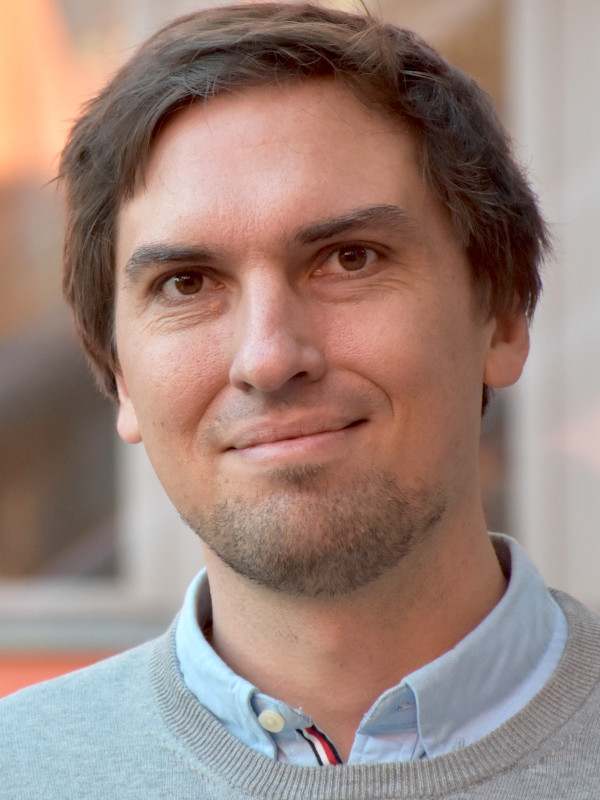
We are excited to announce that Dr. Christian Glaser has been appointed as a new PI at our CRC.
Christian Glaser is an astroparticle physicist at TUDO with a particular interest in artificial intelligence, high-energy cosmic neutrinos and cosmic rays. His research focuses on developing radio detectors to measure these particles. He is playing key roles in two major international projects at some of the most extreme locations on Earth: the construction of the RNO-G detector in Greenland and the development of IceCube-Gen2 at the South Pole.
He is also involved in the Pierre Auger Observatory in Argentina - the world's largest cosmic ray detector, where he is working on an improved measurement of the muon content in air showers to better understand hadronic interactions at extreme energies, a key objective in the CRC.
In addition to the theoretical modeling of radio emission and the analysis of experimental data, he is also developing new types of detection hardware.
One focus in the coming years will be the ERC NuRadioOpt project, which aims to significantly improve the performance of future neutrino detectors through the use of artificial intelligence.
02.07.2025
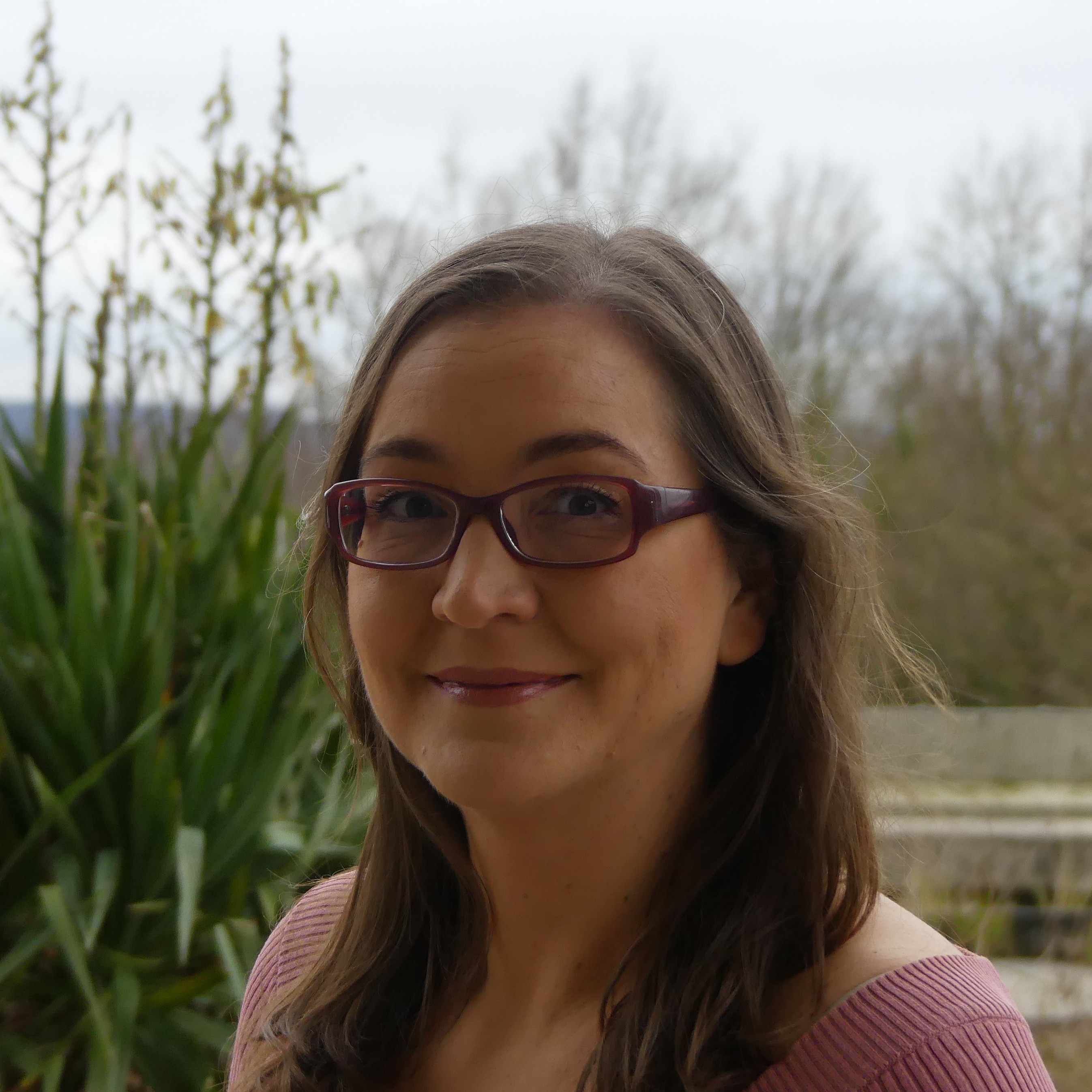
We congratulate our CRC Spokesperson Julia Tjus on her election into the Senate of the Deutsche Forschungsgemeinschaft (DFG) - German Research Foundation!
The Senate is the central scientific body that advises on all matters of fundamental importance to the DFG and, in many cases, also makes decisions.
18.06.2025
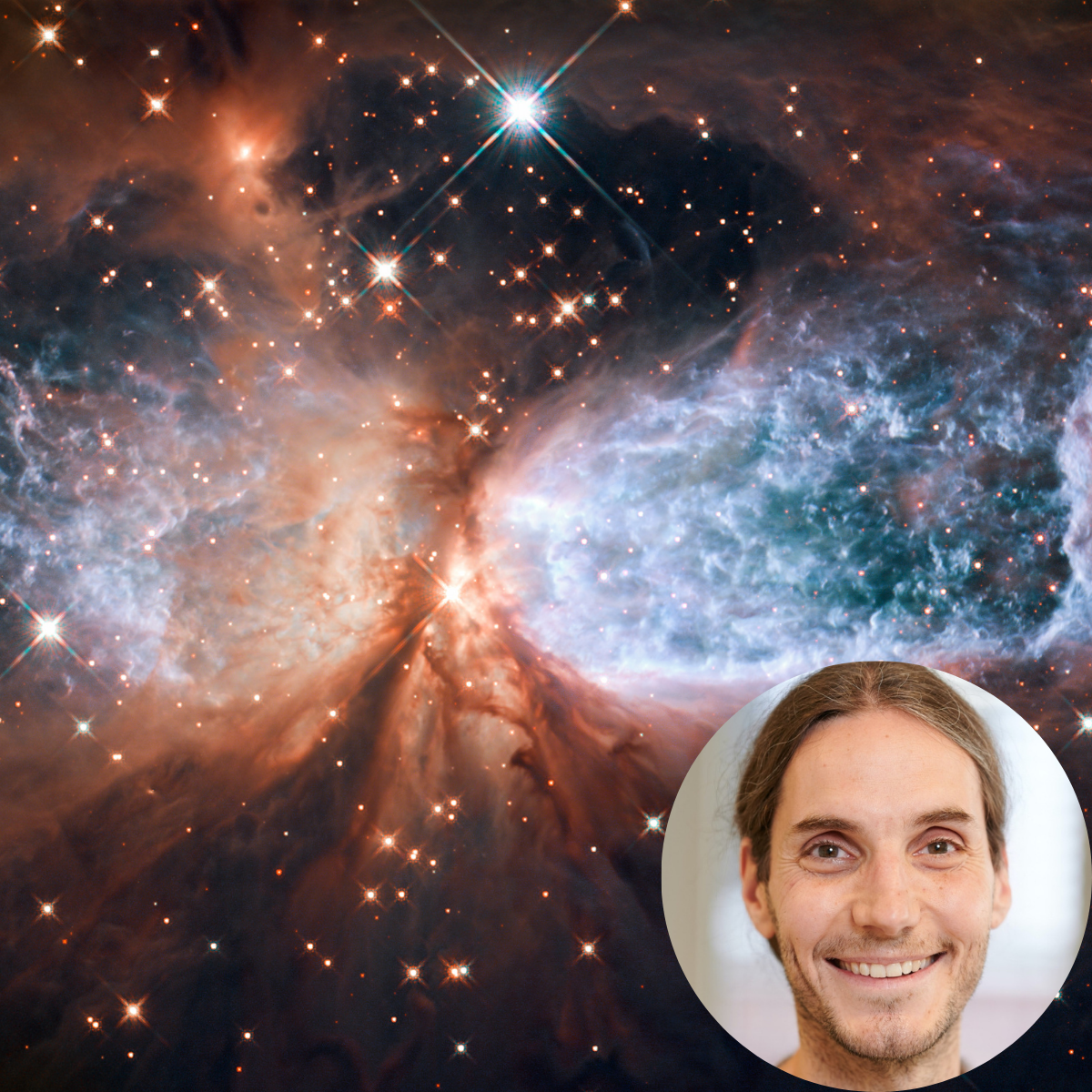
We are pleased to invite you to the public lecture “Die Geburt stellarer Monster - Über die Entstehung der massereichsten Sterne im Universum " (in German).
In his talk, Rolf Kuiper will explore how the most massive stars in the cosmos are formed, which are rare in number, but extremely bright. He will connect the latest insights from astrophysical simulations with brand-new observations of young, massive star-forming regions that have only recently become accessible.
When 25.6.25 at 20:00
Where Planetarium Bochum
For registration and further information, please have a look at the Planetarium’s homepage.
Picture:
In the S 106 region, about 2,000 light-years from Earth, a particularly massive star is being born.
02.06.2025
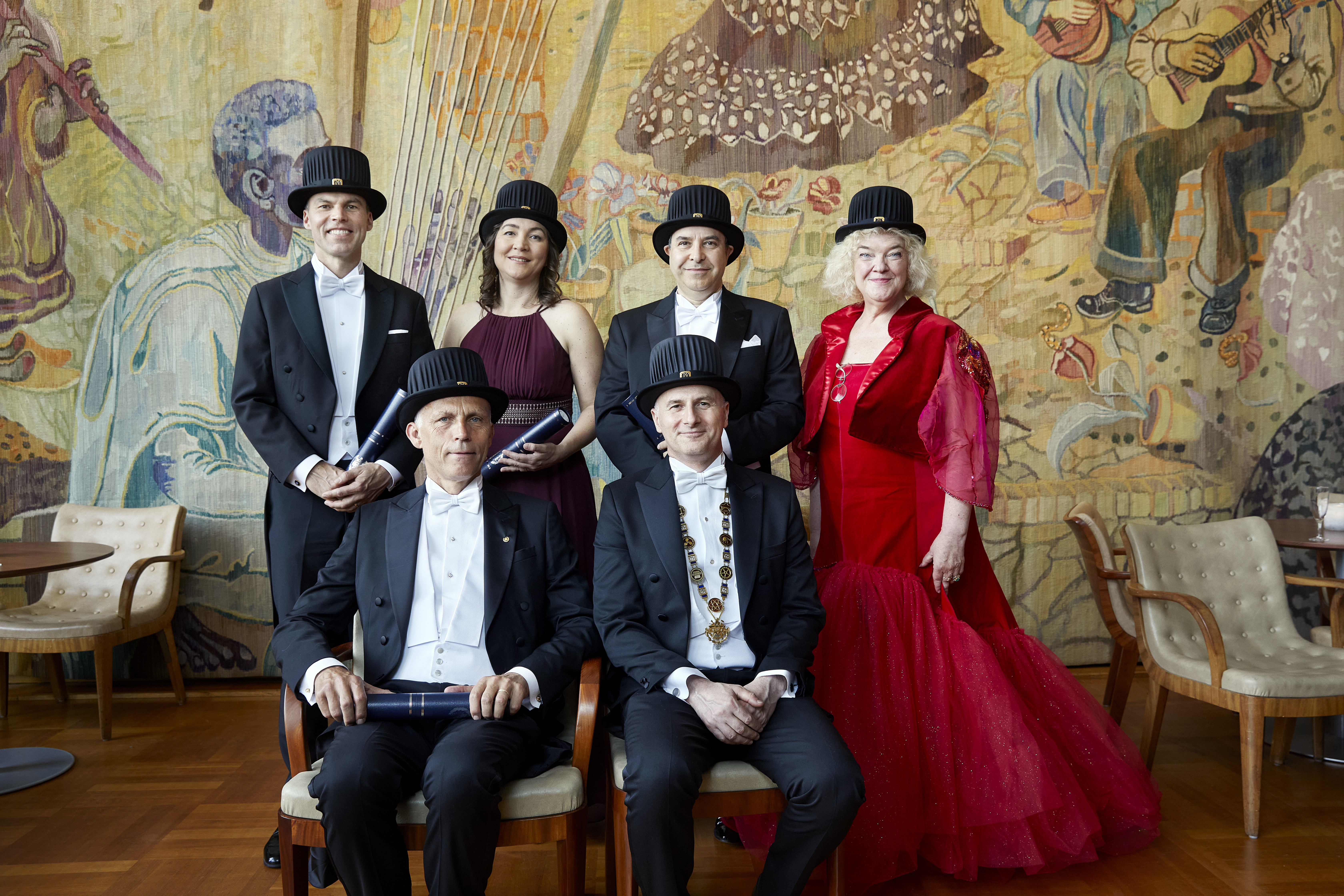
We are happy to announce that our spokesperson Julia Tjus has been officially named an Honorary Doctor of the Chalmers University of Technology as of May 24, 2025.
This prestigious recognition was awarded during the university’s annual academic celebration in the Gothenburg Concert Hall.
Julia has been honored for her groundbreaking contributions to astroparticle physics. Her pioneering work in neutrino astronomy and cosmic ray research, especially her collaboration with the IceCube Neutrino Observatory, has significantly advanced our understanding of the high-energy universe.
Since her postdoctoral stay in Gothenburg, she has maintained a close connection with Chalmers University. As a Jubilee Professor in 2023 and now as an Associate Professor, she continues to strengthen the strong partnership with Nordic radio and neutrino astronomy.
We also extend our congratulations to the new doctors of Chalmers University, the honorary doctors Babak Hassibi (CalTech), Herre van der Zant (TU Delft), and Marcus Wandt (Saab/Esa), and Chalmers Supervisor of the Year Yinan Yu.
Please also have look at the news articles of Chalmers
and RUB News
Picture:
All honorary doctorates: front: Herre van der Zant, Martin Nilsson Jacobi (President of Chalmers University), back: Marcus Wandt, Julia Tjus, Babak Hassibi, Eva Olsson (Chair of the Faculty Council)